The Swiss population is getting older. By 2030, the number of people over 90 will almost double. At the same time, a study by the Federal Office for Housing shows that only around 25 per cent of homes in Switzerland are considered barrier-free. Yet obstacle-free living spaces benefit not only older people but every generation. In this article, you will find out which measures make your home barrier-free and how you can continue to live independently in the long term.
What does barrier-free building mean?
Barrier-free building means designing living spaces without obstacles that could restrict freedom of movement. The aim is a living environment that can be used without difficulty even with physical limitations, in old age or with aids such as a wheelchair or walking aids.
SIA standard 500 of the Swiss Society of Engineers and Architects defines the standards for obstacle-free building. The Disability Discrimination Act requires that in residential buildings with more than eight apartments, all units must be accessible without obstacles. But forward-looking planning also pays off for single-family houses and smaller residential units.
Benefits for all generations
The whole family benefits from barrier-free homes. Step-free doorways make it easier to push a pram just as much as to move around in a wheelchair. Wide doors and enough room to manoeuvre provide comfort in everyday life. Handrails on stairs offer security with a sprained ankle just as much as in old age.
Every year, more than 90,000 people over the age of 64 are injured in falls in Switzerland. Many of these accidents could be avoided with age-appropriate construction. Non-slip floor coverings, good lighting and the removal of trip hazards significantly reduce the risk of accidents.
Key measures at a glance
Adapting a home to barrier-free standards involves several areas. The earlier these measures are included in the planning, the more cost-effective they are to implement.
Entrances and doorways
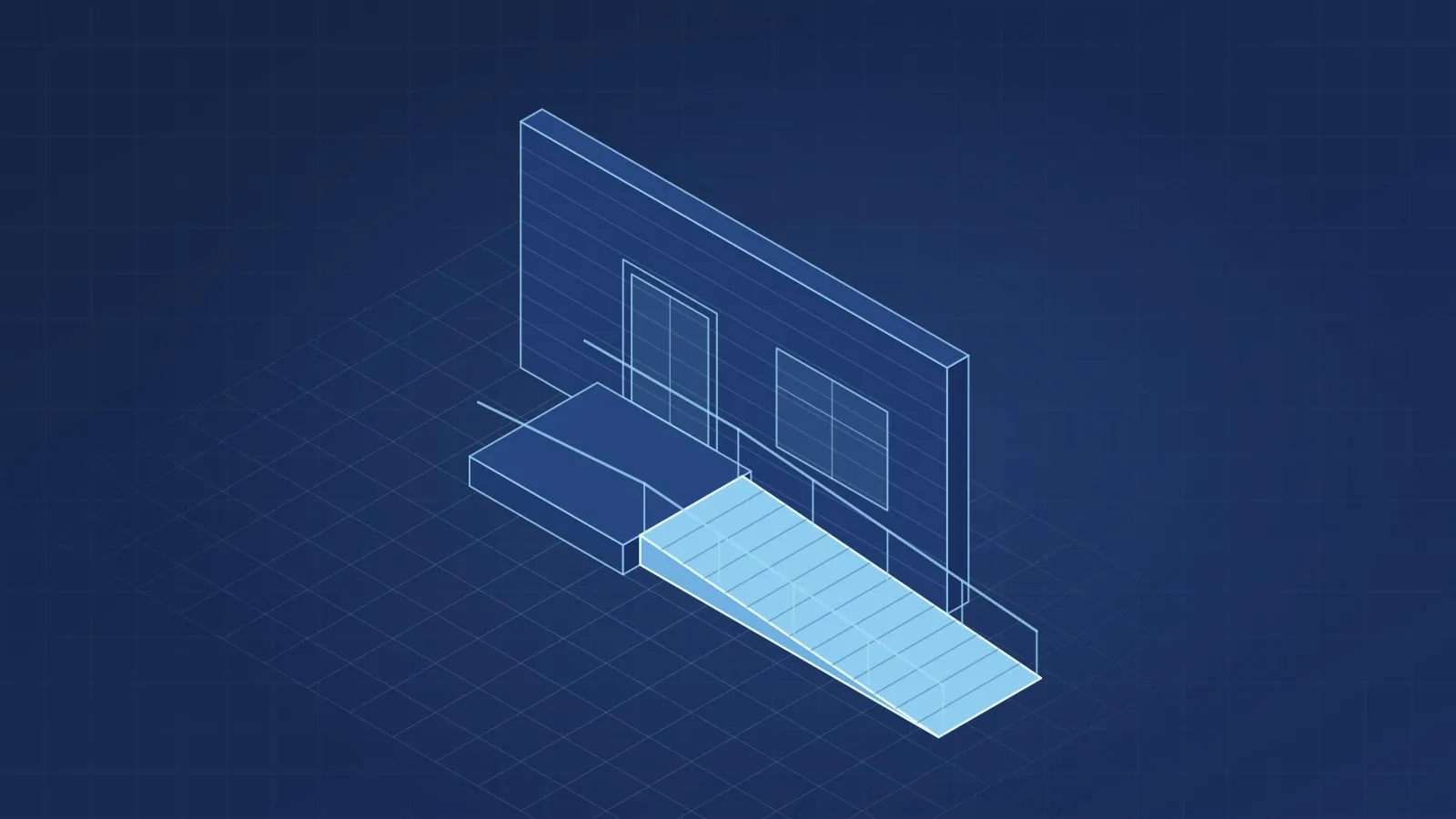
Step-free entrances are the foundation of barrier-free living. Door widths of at least 80 centimetres allow passage with a wheelchair or walking aid. Ramps or lift systems overcome differences in height at the front door. Hallways should be wide enough to manoeuvre easily, even with mobility aids.
Designing a safe bathroom
The bathroom is an area with an increased risk of accidents. Walk-in showers without a step, grab rails on the walls and non-slip tiles significantly increase safety. A washbasin with knee clearance underneath allows it to be used while seated. Sufficient space to manoeuvre is important for turning in a wheelchair.
Kitchen and living area
In the kitchen, worktops at different heights should be planned in. Hobs and sinks with knee clearance underneath make them easier to use while seated. Drawers instead of base cupboards allow ergonomic access. In the living area, sockets at a suitable height and easy-to-reach light switches provide everyday comfort.
Stairs and storeys
In multi-storey buildings, stairs are often the biggest obstacle. Handrails on both sides provide safety when climbing stairs. Good lighting and high-contrast step markings help people with impaired vision. In case stairs can no longer be managed, provision should be made for retrofitting a stairlift or lift.
In new buildings, it is advisable to arrange at least all the essential living functions on one level. This way, the home remains fully usable even with restricted mobility.
Costs and funding
With early planning, the additional costs of barrier-free building average less than two per cent of the total construction cost. Converting later is considerably more expensive. Various cantons offer funding programmes for age-appropriate housing. Health insurers and disability insurance (IV) can also contribute under certain conditions.
Conclusion
Barrier-free building is an investment in your own future at home. With well-thought-out planning, you create a home that offers comfort and safety at every stage of life. Beri Bau AG supports you in implementing barrier-free living concepts. From step-free transitions and bathroom conversions to adapting an entire apartment, we offer professional solutions from a single source.
Contact us for a free, no-obligation consultation and discover our reference projects at beribau.ch/en/references.